
n a society battling poverty, unemployment, insecurity, and moral decline, there is one constant truth that must never be debated or compromised: education remains the most powerful weapon for individual and national transformation. This conviction forms the foundation of my philosophy — “Education or Nothing.”
Education is not an option. It is not a luxury reserved for the privileged. It is the lifeline of any society that desires progress, stability, and dignity. Where education is neglected, ignorance thrives; where ignorance thrives, poverty and crime take root. This is why I firmly believe that any meaningful development agenda that sidelines education is already destined to fail.
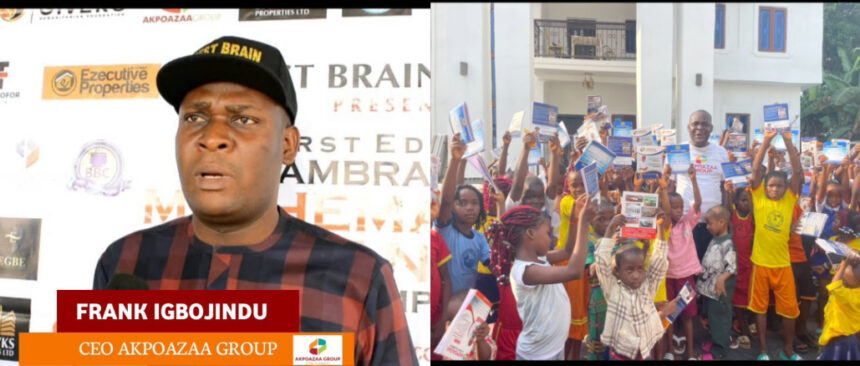
Over the years, my commitment to education has gone beyond words and slogans. It has been demonstrated through consistent, measurable, and people-centered actions. From supporting primary and secondary school pupils, to empowering teachers, rewarding academic excellence, and creating platforms that celebrate knowledge, my interventions have always been guided by one principle: when you educate a child, you secure the future of a community.
Through structured initiatives, educational competitions, scholarships, learning materials support, and direct financial interventions, I have remained intentional about encouraging young people to take education seriously, while also improving teachers’ welfare and motivation. Education cannot thrive where teachers are ignored or discouraged. Any society that undermines its teachers undermines its own future.
The Best Brain Contest (BBC) and similar academic platforms were born out of this conviction. They are not just competitions; they are instruments of inspiration. They restore pride in academic excellence, reward diligence, and remind our children that knowledge still pays. By supporting students, teachers, and schools across disciplines such as Mathematics and Indigenous Language studies, we reaffirm the value of both global competitiveness and cultural identity.
My advocacy is also rooted in realism. Parents must learn to embrace affordable and accessible education over misplaced pride. Many great men and women today are products of community schools and modest educational backgrounds. What matters is not the name of the school, but the seriousness of purpose, quality of instruction, and moral upbringing.
Beyond formal education, skill acquisition and capacity development remain critical. Education must empower the mind and equip the hands. A society that produces only certificate holders without practical skills will continue to struggle. This is why educational support must be holistic — combining academics, vocational training, mentorship, and character development.
“Education or Nothing” is therefore not a slogan of extremism; it is a declaration of priority. It means that before politics, before personal comfort, before prestige projects, we must invest in human capital. Roads may decay, buildings may collapse, but an educated mind remains a lifelong asset.
As a people and as a nation, we must deliberately choose education — consistently, courageously, and collectively. Governments, private individuals, community leaders, and philanthropists must see education not as charity, but as responsibility. The future we desire can only be built by minds we deliberately prepare today.
I remain committed to this cause, not because it is popular, but because it is necessary. My stand is clear and unwavering:
Education or Nothing.